







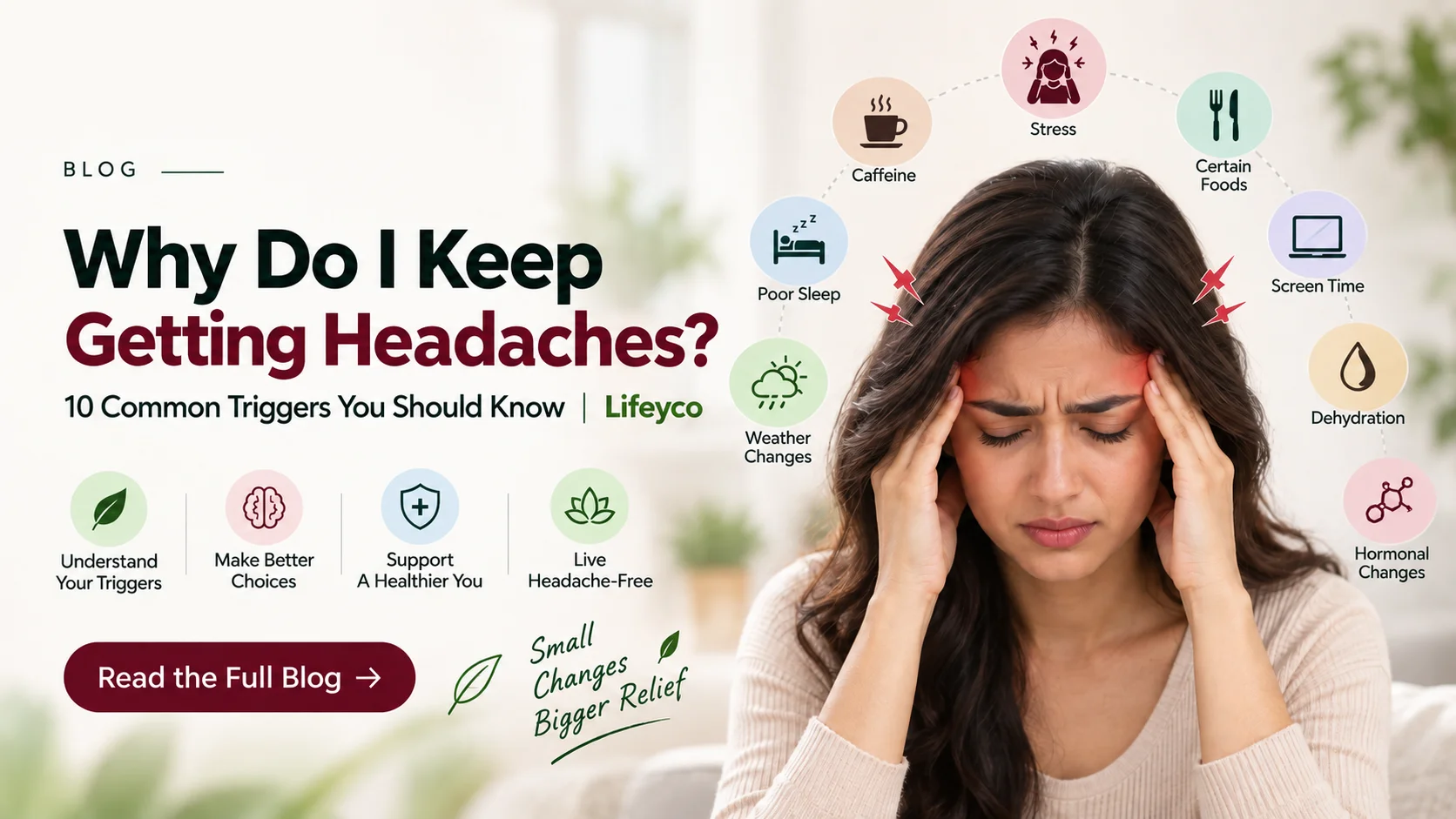
Direct answer: Headaches do not happen randomly. Why you keep getting headaches almost always traces back to one or more identifiable triggers — stress, sleep disruption, dehydration, blood sugar drops, caffeine patterns, screen time, sensory stimuli, weather changes, muscle tension, or hormonal fluctuations. The ten triggers below cover the vast majority of recurring headache cases in adults. Identifying yours is the first step to breaking the cycle.
“Headaches don’t always happen randomly. Your sleep, hydration, stress levels, meals, environment, and even changes in weather can influence when a headache occurs.” — this is one of the most important things to understand about recurring headaches, and yet most people never stop to examine the pattern.
According to the World Health Organisation, headache disorders are among the most prevalent nervous system conditions globally — and tension-type headache and migraine together are the second and third most disabling conditions worldwide by years lived with disability. Yet despite this, most headache sufferers never identify their personal triggers — leaving them in a cycle of reactive pain management rather than prevention.
This guide covers all 10 clinically recognised headache triggers in detail — what causes each one biologically, how to recognise it, and what to do about it.
What Makes a Headache “Triggered”?
A trigger is not a direct cause — it is a precipitating factor that pushes a susceptible nervous system past its threshold for headache. The same trigger may cause a debilitating migraine in one person and no symptoms in another, because individual neurological thresholds vary.
This is why identifying triggers is personal work. A cross-sectional study of 116 headache patients published in PubMed Central (PMC4553925) found that most headache sufferers report multiple triggers simultaneously — with stressful life events and intense emotions ranking as the most frequently reported triggers across all headache subtypes. The practical implication: identifying and addressing even one major trigger can substantially reduce headache frequency.
Approximately three-quarters of people who experience migraine report having identifiable triggers for their headaches, according to research published in Current Opinion in Neurology. Despite this, most people are never taught to track their triggers — relying instead on pain medication alone, which treats symptoms without addressing causes.
10 Common Reasons Why You Keep Getting Headaches
Stress is the most frequently reported headache trigger across all headache types — tension-type, migraine, and cluster. When the body experiences psychological stress, it releases cortisol and adrenaline, which cause muscle tension in the scalp, neck, and shoulders, constrict then dilate blood vessels, and alter serotonin levels — all of which directly contribute to head pain.
The “let-down” headache is a well-documented phenomenon: many people experience migraines not during peak stress, but immediately after it — on weekends, after a deadline, or at the start of a holiday. The brain’s rebound from high cortisol is itself a trigger. Mayo Clinic confirms that everyday stressors — not just major life events — are the primary stress-headache driver.
Sleep and headache have a bidirectional relationship — poor sleep triggers headaches, and headaches disrupt sleep. Both too little sleep (under 6 hours) and too much sleep (oversleeping on weekends) are recognised headache triggers. The mechanism involves disruption of serotonin and dopamine systems, which regulate both sleep architecture and pain thresholds in the brain.
Irregular sleep schedules are particularly problematic — the brain’s pain regulation systems function best when sleep timing is consistent. People who sleep well on weeknights and then sleep in significantly on weekends often experience Saturday morning “weekend headaches” directly as a result of this schedule shift.
Dehydration is one of the fastest-acting and most overlooked headache triggers. Even a 1–2% reduction in body water weight — which can occur within hours of inadequate fluid intake — is sufficient to trigger a headache in susceptible individuals. The mechanism involves reduced blood volume, which causes blood vessels to constrict and reduces oxygen and glucose delivery to the brain.
The brain itself is approximately 75% water, and even mild dehydration affects the fluid surrounding it — increasing intracranial pressure sensitivity. Dehydration headaches characteristically present as a dull, pressing pain that worsens with movement and typically improves within 30 minutes to 3 hours of adequate rehydration.
The brain is the body’s most metabolically demanding organ — consuming approximately 20% of the body’s total glucose despite being only 2% of its weight. When meals are skipped or delayed significantly, blood glucose drops, triggering the release of counter-regulatory hormones including glucagon, cortisol, and adrenaline — all of which can precipitate a headache.
This type of headache typically begins with mild hunger or irritability, progresses to a dull, throbbing pain across the forehead or temples, and is quickly relieved by eating. People who skip breakfast or eat very late lunches are particularly susceptible. The Indian dietary pattern of chai-before-breakfast-and-then-nothing-until-1pm is a common but under-recognised headache driver.
Caffeine has a paradoxical relationship with headaches: in moderate amounts it can relieve headache pain (which is why it is included in many over-the-counter headache medications), but both excess caffeine and abrupt caffeine withdrawal are well-established headache triggers.
Caffeine causes vasoconstriction — narrowing of blood vessels. When regular caffeine consumers skip their morning tea or coffee, the blood vessels rebound into vasodilation, causing the characteristic caffeine-withdrawal headache: a throbbing, bilateral pain that typically appears 12–24 hours after the last caffeine dose. Conversely, excessive caffeine intake overstimulates the nervous system and triggers headaches through a different pathway.
Screen-induced headaches have become one of the fastest-growing headache types globally — driven by remote work, increased device use, and longer daily screen hours. The mechanism involves multiple simultaneous triggers: eye strain from sustained near-focus, blue light exposure that disrupts sleep-wake rhythms, forward head posture that creates neck and suboccipital muscle tension (which refers pain to the head), and reduced blink rate that causes dry eyes and orbital pain.
Most screen-induced headaches are tension-type headaches that begin at the temples, behind the eyes, or at the base of the skull. They worsen throughout the day and typically peak in the late afternoon — exactly when cumulative screen exposure and postural fatigue combine.
Sensory triggers — particularly bright or flickering lights (photophobia triggers) and strong odours (osmophobia triggers) — are among the most well-documented precipitants of migraine specifically, though they also worsen tension headaches.
Bright lights stimulate the trigeminal nerve pathway, which is the primary pain-signalling pathway in migraine. Fluorescent lighting, sunlight through car windows, and screen glare are the most commonly reported light triggers. For smells, strong perfumes, cigarette smoke, petrol fumes, cooking odours, and chemical cleaners are the most frequently reported — even pleasant smells can trigger headaches in osmophobic individuals.
The Greek tertiary hospital study (PMC4553925) found that migraine with aura patients were significantly more likely to report bright sunlight, shining lights, and wind as triggers — suggesting this sensitivity cluster may help identify migraine subtype.
Weather-related headaches are reported by a significant proportion of headache sufferers — and the primary mechanism is barometric pressure change. As atmospheric pressure drops (ahead of rain, storms, or altitude changes), the pressure differential between the sinuses and the external environment changes, creating a sensation of fullness and pain that triggers headaches in sensitive individuals.
Research published in Neurology (Mukamal et al., 2009) found that both weather changes and air pollution act as triggers for severe headaches. In India specifically, the pre-monsoon period — with rapidly dropping barometric pressure and rising heat — is a particularly common trigger window for people with weather-sensitive headaches.
The suboccipital muscles — a group of small, deep muscles at the base of the skull — are among the most common structural contributors to headache. When these muscles tighten (from poor posture, screen use, stress, or sleeping in an awkward position), they refer pain directly to the forehead, temples, and behind the eyes — producing headaches that feel identical to frontal or orbital pain, despite originating in the neck.
This is why neck-related headaches are so frequently misidentified as tension headaches or migraines. The pain location misleads sufferers into treating the head, when the source is cervicogenic (neck-origin). Cervicogenic headaches are particularly common in people with desk jobs, frequent drivers, and anyone who uses a phone for extended periods without ergonomic neck support.
Hormonal headaches are the primary reason migraine prevalence in women is three times higher than in men. The key hormone is estrogen — and specifically, drops in estrogen levels trigger headaches in susceptible women. The pre-menstrual estrogen decline is the most well-documented: more than two-thirds of women who experience migraines report an association with their menstrual cycle.
Beyond the menstrual cycle, hormonal headaches are also triggered by: oral contraceptive use (particularly during the pill-free week when estrogen drops), perimenopause (when estrogen becomes increasingly unpredictable), pregnancy (particularly the first trimester), and postpartum hormonal rebalancing. Mayo Clinic notes that steady estrogen levels tend to improve headaches, while fluctuations worsen them.
How to Identify Your Personal Headache Triggers
Reading through all ten triggers above, most people can identify 2–4 that seem relevant to their experience. But relevance and confirmation are different — the tool that turns identification into certainty is a headache diary.
A headache diary is simply a consistent daily log that records: time and duration of headache, pain location and severity (1–10), what you ate in the previous 6 hours, sleep duration and quality the night before, stress level that day, hydration intake, weather conditions, and for women, menstrual cycle day.
After 4–8 weeks of consistent tracking, patterns become statistically visible — not just anecdotally felt. Most people discover that their headaches cluster around 2–3 predictable triggers, not a random combination of all ten. This focus makes prevention practical rather than overwhelming.
| Track This | Why It Matters | How Often |
|---|---|---|
| Headache time and duration | Reveals patterns — morning, afternoon, or evening clustering | Every headache episode |
| Pain location and intensity (1–10) | Differentiates tension from migraine from cluster | Every headache episode |
| Last meal before headache | Identifies food triggers and blood sugar drops | Every headache episode |
| Sleep duration and quality | Reveals sleep-headache correlation within 24 hours | Daily |
| Stress level (1–5) | Quantifies the stress-headache relationship over time | Daily |
| Water intake | Identifies dehydration as a consistent precursor | Daily |
| Screen hours | Links daily screen load to headache frequency | Daily |
| Menstrual cycle day (women) | Identifies hormonal pattern — premenstrual vs mid-cycle | Daily |
When Should You See a Doctor About Recurring Headaches?
Most recurring headaches are primary headaches — benign in nature and manageable through trigger identification and lifestyle modification. However, certain headache patterns require prompt medical evaluation:
- Is the “worst headache of your life” — sudden, severe, and unlike previous headaches (this requires emergency evaluation to rule out intracranial haemorrhage)
- Is accompanied by fever, neck stiffness, confusion, vision changes, weakness, or difficulty speaking
- Begins after a head injury
- Occurs more than 15 days per month — this meets the clinical definition of chronic daily headache and requires medical assessment
- Is progressively worsening over weeks or months
- Wakes you from sleep consistently
- Is new-onset after age 50
For headaches that do not meet these red-flag criteria but are still significantly impacting daily life, a general physician or neurologist can help with diagnosis, trigger assessment, and preventive strategies.
Also Read on Lifeyco
- Ayurvedic Migraine Roll-On — Ingredients, Benefits and Honest Review
- Shilajit and Ashwagandha Together — Benefits for Stress and Cognitive Health
- Low Testosterone Signs in Men — How Stress and Poor Sleep Are Connected
For people who experience occasional tension or headache discomfort — particularly the stress, screen fatigue, or neck tension types discussed above — some prefer topical approaches such as cooling or aromatic roll-ons as part of their daily self-care routine. The National Centre for Complementary and Integrative Health (NCCIH) notes that ingredients such as peppermint oil have limited evidence for topical use in tension headaches, and may be considered as a complementary comfort measure — though they should not be considered a replacement for medical treatment or professional diagnosis.
Sources and Research References
- WHO. Headache Disorders — Fact Sheet. who.int
- Kararizou E, et al. Trigger factors in primary headaches — Cross-sectional study. PubMed Central, 2015. PMC4553925
- Mayo Clinic. Headaches and stress — Managing triggers. August 2024. mayoclinic.org
- Mayo Clinic. Headaches and hormones — What’s the connection? November 2024. mayoclinic.org
- Mukamal KJ, et al. Weather and air pollution as triggers of severe headaches. Neurology, 2009. DOI: 10.1212/01.wnl.0000344151.56605.94
- NCCIH. Peppermint Oil — What the science says. nccih.nih.gov
- Wikipedia. Headache — Classification and causes. Wikipedia
Disclaimer: This article is for educational and informational purposes only and does not constitute medical advice. Headache disorders can have multiple causes — if you experience frequent, severe, or unusual headaches, please consult a qualified healthcare professional or neurologist for a proper diagnosis and treatment plan. The information in this article is based on published medical sources and is not intended as a substitute for clinical evaluation.
FAQ
Why do I keep getting headaches every day?
Daily recurring headaches are almost always linked to identifiable triggers — most commonly chronic stress, poor or irregular sleep, dehydration, and screen overuse. The combination of these lifestyle factors in modern Indian urban life creates a convergent headache risk that is self-reinforcing. Keeping a headache diary for 4–8 weeks to map when headaches occur against sleep, stress, food, and screen time typically reveals a clear pattern that guides prevention.
What is the most common reason for frequent headaches?
Stress is the single most frequently reported headache trigger across all headache types — confirmed by multiple clinical studies. Stress causes muscle tension in the scalp and neck, disrupts sleep, alters serotonin pathways, and triggers inflammatory responses — all of which contribute to head pain. Addressing stress consistently through lifestyle changes is the most impactful single intervention for most frequent headache sufferers.
Can dehydration really cause headaches?
Yes — even mild dehydration of 1–2% body weight triggers headaches in susceptible people. The brain is surrounded by cerebrospinal fluid, and even small changes in fluid levels affect intracranial pressure sensitivity. Dehydration headaches typically feel dull and pressing, worsen with movement, and improve within 30 minutes to 3 hours of adequate rehydration.
Why do I get headaches after skipping meals?
Skipping meals causes blood glucose to drop — a state called hypoglycaemia. The brain depends almost entirely on glucose for energy, and when levels fall, the body releases counter-regulatory hormones including cortisol and adrenaline — both of which can trigger headaches. This type of headache typically begins with irritability or shakiness and resolves quickly after eating.
Are hormonal headaches only a problem for women?
Hormonal headaches predominantly affect women due to menstrual cycle-related estrogen fluctuations — more than two-thirds of women with migraine report a link to their menstrual cycle. However, hormonal changes in men (particularly testosterone decline with age or disruption from high stress) can also contribute to headache frequency, though this connection is less well-documented in clinical literature.
How many days of headaches per month is too many?
More than 15 headache days per month meets the clinical definition of Chronic Daily Headache (CDH) — a condition that warrants medical evaluation. For context, a person experiencing headaches 2–3 days per week is already at this threshold. CDH can have multiple causes including medication overuse headache (from taking pain relief more than 10 days per month), underlying migraine disorder, or lifestyle factors requiring clinical support.