







Quick answer: A dry cough produces no mucus or phlegm — it feels like a persistent tickle or scratch in the throat. A wet cough is productive — it brings up phlegm or mucus, which is the body clearing the airways. The difference between dry and wet cough matters because they signal different underlying causes and respond to different types of care. Dry coughs often indicate irritation or early viral infection; wet coughs more commonly signal active respiratory infection or fluid in the airways.
Coughing is one of the most common reasons people visit a doctor — and yet most people treat every cough the same way. Understanding whether you have a dry cough vs wet cough is the first and most important clinical clue about what is happening in your respiratory system and what is most likely to help.
The NHS notes that coughs commonly arise from colds and flu, but also from smoking, acid reflux, allergies, and respiratory infections. A persistent or worsening cough — lasting more than three weeks — warrants medical evaluation. This guide covers the full picture: what each cough type means, what causes each, and how to manage them appropriately.
What Is a Dry Cough?
A dry cough — clinically called a non-productive cough — is a cough that does not produce mucus or phlegm. Instead of clearing something from the airways, it is triggered by irritation or inflammation of the throat and airway lining. The sensation is typically a tickle, scratch, or burning feeling in the throat that produces a hacking or barking cough sound.
Because nothing is being expelled, a dry cough can become self-perpetuating: the act of coughing irritates the already-inflamed throat lining, which triggers more coughing — creating a feedback loop that can persist long after the original cause has resolved. Dry coughs are frequently worse at night, when lying down removes gravity’s assistance in keeping airway secretions in place.
Cleveland Clinic family physician Dr. Colleen Clayton, MD explains: “The type of cough you’re dealing with — dry or wet — can give important clues about what’s going on in your body. It can help you decide how to manage it at home and when to talk to your doctor.”
What Is a Wet Cough?
A wet cough — clinically called a productive cough — is a cough that brings up mucus or phlegm from the lungs or airways. It serves a biological purpose: the body is actively trying to clear infection, fluid, or excess secretions from the respiratory tract. The sound is characteristically rattling, gurgling, or loose — very different from the sharp, dry bark of a non-productive cough.
The colour and consistency of phlegm produced by a wet cough can indicate the underlying cause. Clear or white phlegm typically indicates viral infection or allergy. Yellow or green phlegm suggests a bacterial infection is present. Brown or rust-coloured phlegm can indicate old blood or significant infection. Any blood in phlegm requires prompt medical evaluation.
Unlike dry coughs, wet cough treatments aim to support the coughing reflex rather than suppress it — because the mucus clearance the cough is performing is actually beneficial. Suppressing a wet cough without addressing the underlying infection can allow secretions to accumulate and worsen the condition.
Dry Cough vs Wet Cough — Side-by-Side Comparison
Dry Cough (Non-Productive)
- No mucus or phlegm produced
- Tickling, scratching, or burning sensation
- Barking, hacking, or sharp sound
- Worsens at night or when lying down
- Often persists after infection clears
- Treatment: soothe and reduce irritation
Wet Cough (Productive)
- Produces phlegm or mucus
- Rattling, loose, or gurgling sensation
- Wet, productive sound
- Often worse in the morning
- Active during and after infection
- Treatment: support clearance, treat cause
| Factor | Dry Cough | Wet Cough |
|---|---|---|
| Medical term | Non-productive | Productive |
| Mucus / Phlegm | None | Yes — clear, yellow, green |
| Primary sensation | Tickle, scratch, irritation | Heaviness, gurgling, looseness |
| Sound | Barking, hacking, sharp | Rattling, wet, productive |
| Worst time of day | Night / when lying down | Morning / after waking |
| Common cause | Viral early stage, allergy, GERD, dry air | Bacterial infection, bronchitis, cold/flu |
| Treatment goal | Soothe and reduce irritation | Support mucus clearance |
| Suppress reflex? | Generally yes — not productive | No — clearance is beneficial |
Common Causes of Dry Cough
Dry coughs arise when the airways are irritated or inflamed without producing excess mucus. The most common causes in India and globally:
Viral respiratory infections (early stage)
Colds, flu, and COVID-19 typically begin with a dry cough as the virus inflames the airway lining before significant mucus production begins. COVID-19 specifically — per WHO — presents with dry cough in its most common form.
Allergies (allergic cough)
Pollen, dust mites, pet dander, and mould trigger histamine release, which causes airway inflammation without infection. Seasonal allergic coughs are almost always dry and are often accompanied by sneezing and watery eyes.
Gastroesophageal reflux (GERD)
Stomach acid that refluxes into the oesophagus and throat irritates the larynx, triggering a chronic dry cough — often without heartburn. GERD-related cough is frequently worse after meals and when lying down at night.
ACE inhibitor medications
A well-documented side effect of ACE inhibitor drugs (commonly prescribed for hypertension) is a persistent dry cough — occurring in 10–15% of users. It is caused by bradykinin accumulation in the airways.
Asthma
Asthma often presents as a dry, non-productive cough — especially “cough-variant asthma,” where cough is the primary symptom rather than wheezing. Asthmatic coughs typically worsen with exercise, cold air, or allergen exposure.
Environmental irritants
Air pollution (especially in Indian metro cities), smoke, dust, chemical fumes, and extremely dry air all directly irritate the airway lining, triggering a dry cough without infection. A significant driver of urban dry cough in Delhi and other high-pollution cities.
Common Causes of Wet Cough
Wet coughs arise when the airways produce excess mucus — typically in response to infection. The body uses coughing to expel this mucus and the pathogens it contains:
Common cold and flu
The most frequent cause of a wet cough. Viral upper respiratory infections trigger significant mucus production as the immune system floods the airways with inflammatory fluid. Most cold-related wet coughs resolve within 1–2 weeks.
Acute bronchitis
Inflammation of the bronchial tubes — typically viral, occasionally bacterial — causes the hallmark productive cough with yellow-green phlegm that can persist for 2–3 weeks after the initial infection clears.
Pneumonia
Bacterial or viral pneumonia fills the lung’s air sacs with fluid and pus, producing a wet cough with rust-coloured or green phlegm, often accompanied by fever and chest pain. Pneumonia requires medical evaluation and treatment.
COPD (Chronic Obstructive Pulmonary Disease)
COPD — including chronic bronchitis and emphysema — produces a persistent productive cough as damaged airways chronically over-produce mucus. Most common in long-term smokers. WHO estimates COPD affects over 300 million people globally.
Postnasal drip
Mucus dripping from the back of the nasal passages into the throat triggers a cough as the body tries to clear it. Can present as either wet or dry — postnasal drip coughs often feel like a persistent throat-clearing need.
Sinus infection (sinusitis)
Bacterial or viral sinus infections produce thick mucus that drains into the throat, causing a persistent wet cough — often with facial pressure, congestion, and post-nasal drip as accompanying symptoms.
How Long Does a Cough Usually Last?
Cough duration is an important clinical indicator. Most acute coughs from common infections are self-limiting — they resolve as the underlying infection clears. Coughs that last longer than expected warrant investigation for an underlying cause.
| Cough Classification | Duration | Typical Cause | Action |
|---|---|---|---|
| Acute cough | Under 3 weeks | Common cold, flu, early infection | Self-care and monitoring |
| Subacute cough | 3–8 weeks | Post-infectious, bacterial sinusitis, pertussis | Medical evaluation if not improving |
| Chronic cough | Over 8 weeks | GERD, asthma, COPD, ACE inhibitors, allergies | Medical evaluation required |
| Post-viral cough | 2–6 weeks after infection | Airway hypersensitivity after viral illness | Usually self-limiting; doctor if severe |
Home Care That May Help
Several evidence-informed home care measures can reduce cough severity and duration, particularly for mild acute coughs that do not require medical treatment:
Honey and warm water
Honey is one of the best-supported home remedies for cough. A Cochrane review and multiple RCTs have confirmed honey reduces cough frequency and severity in both children (over 1 year) and adults, outperforming several over-the-counter cough suppressants. One to two teaspoons in warm water before sleep is the standard approach.
Steam inhalation
Particularly effective for wet coughs — steam helps loosen and thin mucus, making it easier to expel. Adding Eucalyptus oil (Neelgiri Ka Tel) to steam water provides additional airway-opening benefit. Inhale for 10–15 minutes, 2–3 times daily during a wet cough.
Staying well hydrated
Adequate hydration keeps mucus thin and easier to clear in wet coughs, and soothes the inflamed throat lining in dry coughs. Warm liquids — herbal teas, warm water with ginger, warm broths — are particularly soothing and reduce throat irritation.
Elevating the head during sleep
Sleeping with an extra pillow reduces postnasal drip and acid reflux — two common nighttime cough triggers. Particularly helpful for dry coughs that worsen at night or are GERD-related.
Avoiding known irritants
Smoke, dust, strong perfumes, and cold dry air all worsen both types of cough. Wearing a mask in polluted outdoor environments, using a humidifier in dry indoor air, and avoiding secondhand smoke reduces ongoing airway irritation during recovery.
Ginger and Tulsi tea
Classical Ayurvedic remedies with documented bioactive properties. Gingerol in ginger has anti-inflammatory and antimicrobial activity; Tulsi (Holy Basil) contains eugenol and caryophyllene, which reduce airway inflammation. Widely used in India as first-line home management for cough and sore throat.
When Should You See a Doctor?
Most acute coughs resolve on their own within 1–3 weeks. The following signs indicate that a cough requires medical evaluation rather than home management alone:
- Has lasted more than 3 weeks without clear improvement
- Is accompanied by blood in the phlegm or coughed-up blood — this always requires evaluation
- Is associated with fever above 38.5°C persisting more than 3 days
- Causes difficulty breathing, chest pain, or shortness of breath
- Is accompanied by unexplained weight loss or night sweats
- Is getting progressively worse rather than improving
- Occurs in an infant, young child, elderly person, or immunocompromised individual
- Is producing thick green or brown phlegm — possible sign of bacterial infection requiring assessment
Emergency care is needed if a cough is accompanied by severe difficulty breathing, bluish lips or fingertips, high fever with confusion, or chest pain. These may indicate pneumonia, pulmonary embolism, or other serious conditions.
Can Herbal Cough Remedies Help?
Herbal and Ayurvedic approaches to cough management have been used for thousands of years in India — and a growing body of modern research supports several of these traditional remedies, particularly for mild-to-moderate acute coughs.
Key Ayurvedic herbs with documented cough-relevant activity include:
- Mulethi (Liquorice root / Glycyrrhiza glabra) — contains glycyrrhizin and flavonoids that reduce airway inflammation and soothe the throat lining. Well-documented demulcent (throat-coating) action reduces irritation in dry coughs.
- Tulsi (Holy Basil / Ocimum sanctum) — eugenol and caryophyllene reduce bronchial inflammation and exhibit antimicrobial activity against common respiratory pathogens.
- Ginger (Zingiber officinale) — gingerols are anti-inflammatory and have been shown to inhibit airway contraction, potentially reducing cough frequency in bronchitis.
- Vasaka (Adhatoda vasica) — one of Ayurveda’s primary respiratory herbs. Contains alkaloids (vasicine, vasicinone) that act as bronchodilators and expectorants — particularly effective for wet coughs by loosening mucus.
- Pippali (Long Pepper / Piper longum) — piperine improves bioavailability of other herbs and has direct bronchodilatory effects. A classical Ayurvedic addition to respiratory formulations.
Herbal formulations that combine multiple synergistic herbs — rather than single-ingredient remedies — are more likely to address the breadth of cough physiology: antimicrobial, anti-inflammatory, expectorant, demulcent, and bronchodilatory effects working together.
Also Read on Lifeyco
- Why Do I Keep Getting Headaches? 10 Common Triggers You Should Know
- Lifeyco Migraine Roll-On — Ayurvedic Headache Relief Review
- 7 Chyawanprash Benefits — Including Immunity and Respiratory Health
Lifeyco Ayurvedic Cough Syrup — 18 Herbs for Cough and Cold Relief
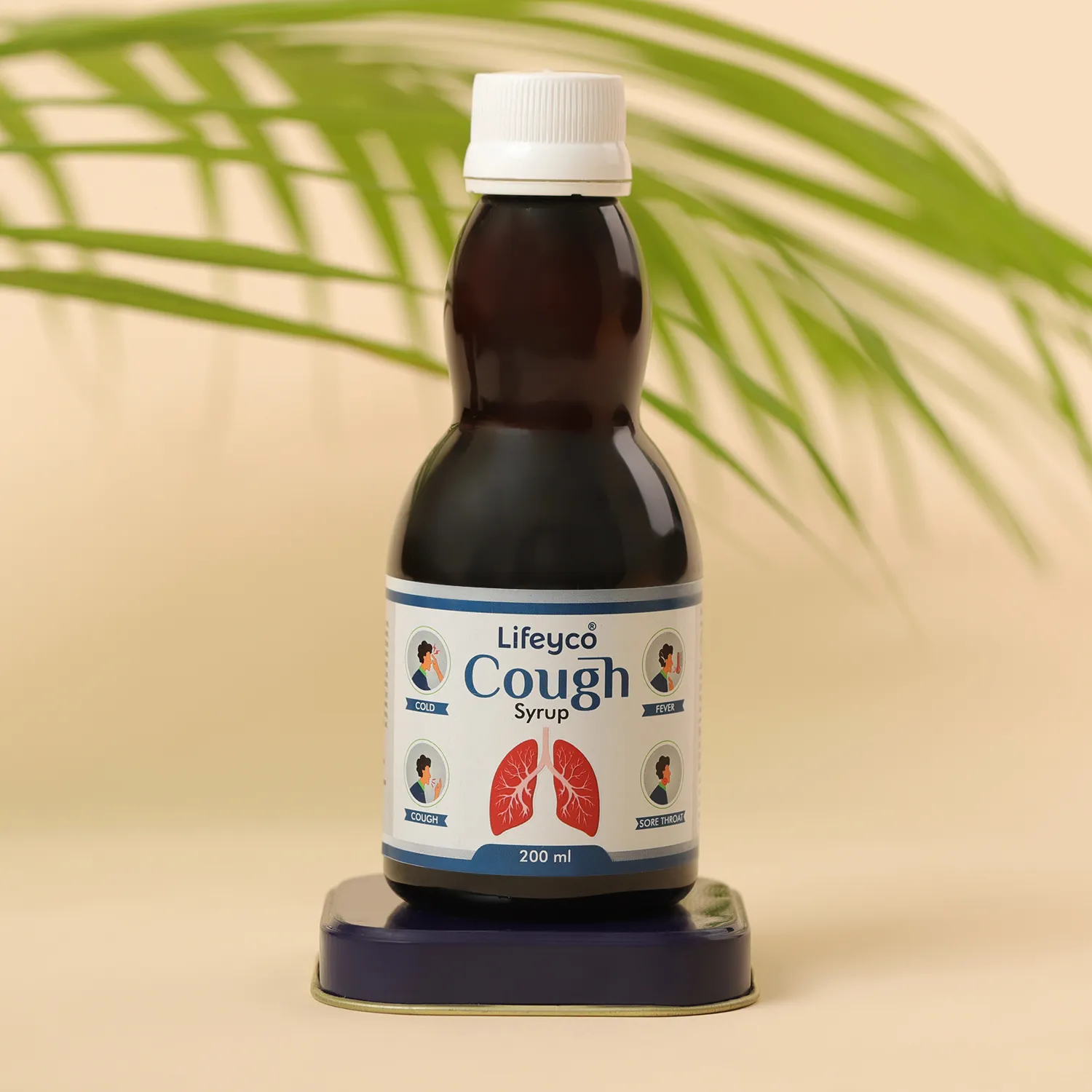
Lifeyco Cough Syrup — 100ML
Fortified with 18 Ayurvedic herbs — quick and long-lasting relief from cough, cold, fever, and sore throat. Clears airways naturally. AYUSH Approved & GMP Certified (Licence No: 1264-ISM HR).
Dosage: Mix 5ml (1 full cap) in warm water. Consume before breakfast or as needed, as directed by a physician.
New customer? Use code WELCOME10 for an extra 10% off your first order.
Sources and Research References
- NHS. Cough — Causes, self-care and when to seek help. nhs.uk
- Cleveland Clinic, Dr. Colleen Clayton MD. Dry Cough vs Wet Cough — What’s the Difference? December 2024. health.clevelandclinic.org
- Medical News Today. Wet cough — What it means, causes, and treatments. Updated June 2024. medicalnewstoday.com
- WebMD. Coughing — Productive vs non-productive, causes and treatments. webmd.com
- WHO. Chronic Obstructive Pulmonary Disease (COPD) — Fact Sheet. who.int
- Oduwole O, et al. Honey for acute cough in children — Cochrane Review. PubMed, 2018. PubMed
- UPMC Health Beat. Dry or Wet Cough? What Your Body Might Be Telling You. 2026. share.upmc.com
Disclaimer: This article is for educational and informational purposes only and does not constitute medical advice. Lifeyco Cough Syrup is an Ayurvedic formulation and is not intended to diagnose, treat, cure, or prevent any disease. For severe, persistent, or worsening cough — or cough associated with blood, fever, or difficulty breathing — please consult a qualified healthcare professional promptly. Research references are linked for transparency.
FAQ
What is the main difference between a dry cough and a wet cough?
A dry cough (non-productive) produces no mucus or phlegm — it is triggered by irritation or inflammation of the throat and airways. A wet cough (productive) brings up mucus or phlegm as the body clears an infection or excess airway secretions. Dry coughs feel like a tickle or scratch; wet coughs sound and feel rattling or loose. The type of cough is an important clinical clue to its underlying cause.
Why do I have a dry cough that won’t go away?
A persistent dry cough lasting more than 3 weeks has several common causes in adults: acid reflux (GERD) — which can cause a chronic dry cough even without heartburn; allergies to dust, pollen or pets; asthma — particularly cough-variant asthma; ACE inhibitor blood pressure medications (a well-known side effect); or post-viral airway hypersensitivity after a recent respiratory infection. If your dry cough persists beyond 3 weeks, a medical evaluation is recommended.
What causes a wet cough with thick yellow or green phlegm?
Yellow or green phlegm indicates the immune system has engaged — white blood cells are fighting an infection, and their breakdown products change mucus colour. Green or dark yellow phlegm specifically suggests a bacterial infection (such as bacterial bronchitis or bacterial sinusitis) may be present — though viral infections can also produce coloured phlegm. Thick green phlegm lasting more than 10 days, particularly with fever, warrants medical assessment.
How long does a cough last after a cold or flu?
An acute cough from a cold or flu typically lasts 1–2 weeks. A post-viral cough — caused by residual airway inflammation after the infection clears — can persist for 4–8 weeks and is classified as subacute. This type of cough usually resolves on its own without antibiotic treatment. If a cough lasts more than 8 weeks, it is classified as chronic and requires medical evaluation.
Is a wet cough more serious than a dry cough?
Not necessarily — both can be mild or serious depending on the underlying cause. A dry cough can indicate asthma, GERD, or early viral infection, while a wet cough typically signals active respiratory infection. The more important indicators of severity are: duration (over 3 weeks), phlegm that contains blood, accompanied fever, difficulty breathing, or progressive worsening — any of which requires medical evaluation regardless of whether the cough is dry or wet.
Can an ayurvedic cough syrup help with both dry and wet coughs?
A well-formulated multi-herb Ayurvedic cough syrup can address both types — because different herbs in the formula target different mechanisms. Demulcent herbs (like Mulethi and honey) soothe irritation in dry coughs; expectorant herbs (like Vasaka) loosen and thin mucus in wet coughs; antimicrobial herbs (like Tulsi and Ginger) address the infection component of both. Ayurvedic cough formulas are most appropriate for mild-to-moderate acute coughs. Always consult a doctor for severe, persistent, or blood-producing coughs.