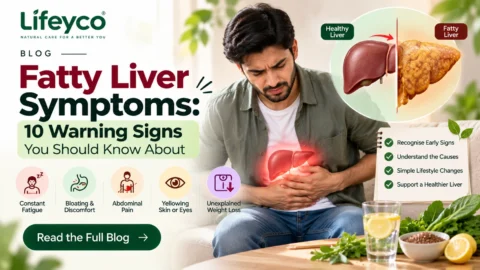







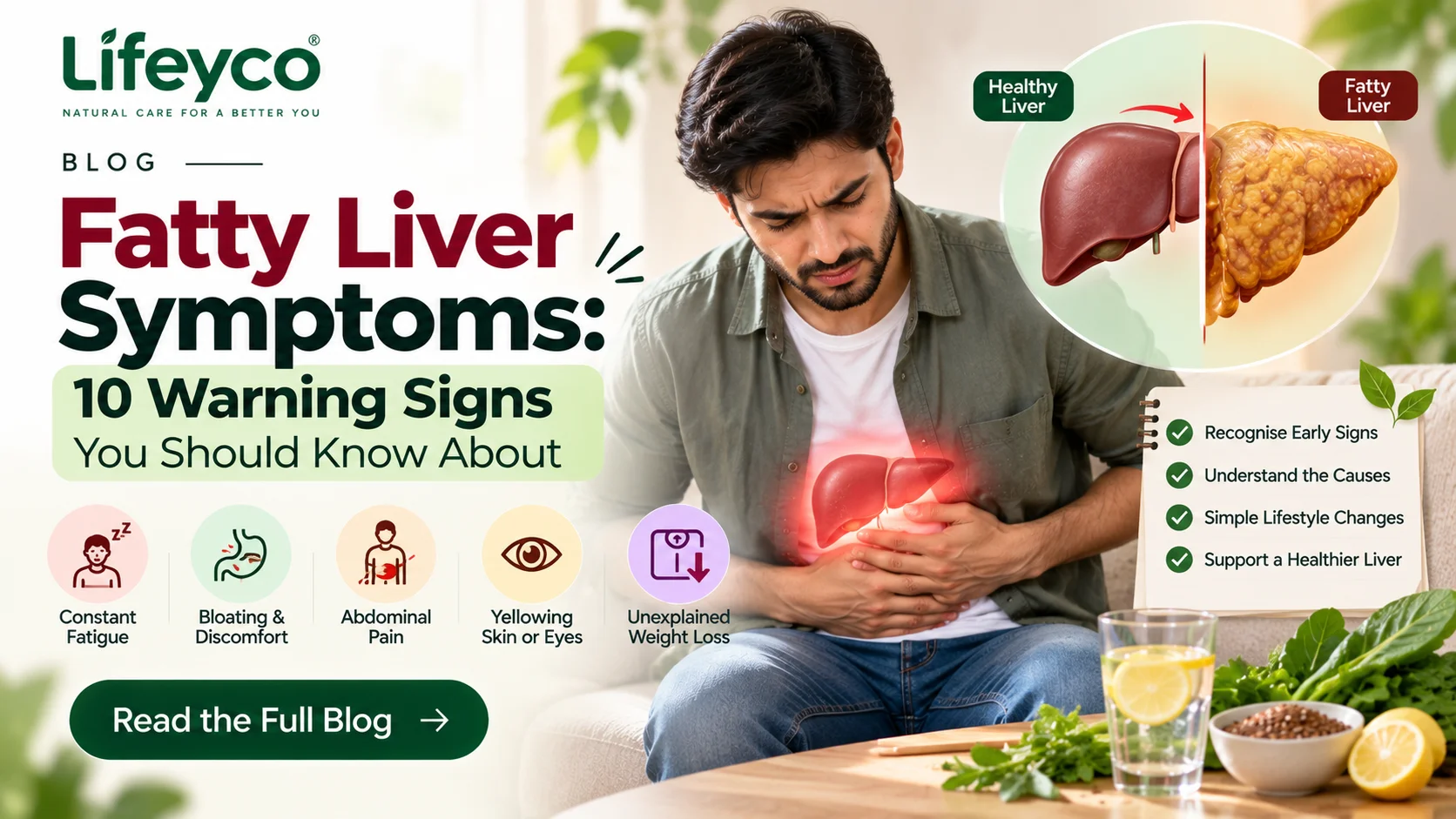
Quick answer: Fatty liver disease often develops silently — most people have no obvious symptoms in the early stages. However, as the condition progresses, recognisable signs emerge: persistent fatigue, upper right abdominal discomfort, nausea, bloating, and in more advanced stages, jaundice, swelling, and cognitive changes. Knowing these fatty liver symptoms early is the most important step toward managing the condition before it progresses to more serious liver damage.
Fatty liver disease has become one of the most common chronic health conditions in India — driven by rising rates of obesity, sedentary lifestyles, processed food consumption, excess alcohol, and unmanaged diabetes. The challenge: most people do not know they have it until it has already progressed significantly. The liver is a remarkably resilient organ — it can sustain considerable damage before symptoms become undeniable.
This guide covers all 10 key fatty liver symptoms clearly — what they feel like, why they happen, and at what stage they typically appear.
What Is Fatty Liver Disease?
Fatty liver disease — medically known as hepatic steatosis — occurs when excess fat accumulates within the liver cells. A healthy liver contains a small amount of fat, but when fat makes up more than 5–10% of the liver’s total weight, it is classified as fatty liver.
There are two main types:
- Non-Alcoholic Fatty Liver Disease (NAFLD) — occurs in people who drink little or no alcohol. Strongly associated with obesity, type 2 diabetes, high cholesterol, and metabolic syndrome. This is the most common form in India.
- Alcoholic Fatty Liver Disease (AFLD) — caused by excessive and prolonged alcohol consumption, which the liver must metabolise, generating fat as a byproduct.
Both types progress through four stages: simple fatty liver (steatosis) → inflammation (steatohepatitis) → scarring (fibrosis) → severe scarring (cirrhosis). Early-stage fatty liver is largely reversible with the right lifestyle changes. Later stages are not — which is why identifying fatty liver symptoms early is so important.
10 Fatty Liver Symptoms and Warning Signs
1 Persistent Fatigue and Weakness
Fatigue is the most commonly reported symptom of fatty liver disease — and also the most easily dismissed. The liver plays a central role in energy metabolism: it converts glycogen to glucose, metabolises fats, and filters toxins from the blood. When liver function is compromised by fat accumulation, these energy-producing processes become less efficient. The result is a deep, persistent fatigue that is not relieved by rest — different in character from simple tiredness after exertion.
People often describe this as feeling “heavy,” drained by mid-morning, or unable to sustain normal daily energy levels despite adequate sleep. It is frequently the first and only symptom in early-stage fatty liver.
2 Discomfort or Heaviness in the Upper Right Abdomen
The liver sits in the upper right quadrant of the abdomen, beneath the ribcage. As fat accumulates, the liver can enlarge — a condition called hepatomegaly. An enlarged liver stretches its outer capsule (Glisson’s capsule), which contains pain-sensitive nerve fibres. This produces a dull ache, feeling of fullness, or heaviness in the upper right abdomen — particularly noticeable after meals or when pressing on that area.
Many people describe this as a vague “pressure” rather than sharp pain. It is often confused with indigestion or gastric issues, which is why it frequently goes uninvestigated. In early fatty liver, this discomfort is usually mild and intermittent. As the condition progresses, it can become more consistent.
3 Nausea and Loss of Appetite
A compromised liver produces less bile — the digestive fluid stored in the gallbladder and released into the small intestine to break down dietary fats. When bile production or release is disrupted, digestion of fatty meals becomes less effective, frequently triggering nausea. The liver also produces proteins that regulate appetite — when this is disrupted, appetite naturally diminishes.
People with fatty liver disease often find they feel full quickly after eating small amounts, lose interest in food they previously enjoyed, or feel persistently nauseous — particularly in the morning or after high-fat meals. Weight loss without trying — paired with poor appetite — in someone with known risk factors for fatty liver is a combination that warrants investigation.
4 Bloating and Digestive Discomfort
Impaired bile production and disrupted gut-liver axis function produce noticeable digestive symptoms. Bloating — a sense of abdominal distension and gas accumulation — is commonly reported. The reduced efficiency of fat digestion means undigested fat reaches the large intestine, where gut bacteria ferment it, producing gas and bloating. Some people also experience alternating constipation and loose stools as the gut-liver communication is disrupted.
These symptoms are easily confused with IBS, simple indigestion, or food intolerance — which is why fatty liver is often overlooked in its early stages. If bloating and digestive discomfort are persistent and accompanied by fatigue or upper right abdominal heaviness, liver-related causes should be considered.
5 Unexplained Weight Changes
Fatty liver has a bidirectional relationship with body weight. Obesity and visceral fat accumulation around the abdomen are among the leading causes of NAFLD — but advanced fatty liver itself causes unexplained weight loss as liver function deteriorates and appetite decreases. The more important weight-related warning sign is central obesity — excess fat specifically around the abdomen — which is both a risk factor and an early indicator of metabolic dysfunction that often accompanies fatty liver.
A waist circumference above 90cm in men and above 80cm in women is considered a risk indicator for metabolic-related fatty liver in Indian adults, given the tendency toward central fat distribution in South Asian populations even at normal overall BMI.
6 Yellowing of Skin or Eyes — Jaundice
Jaundice is a more advanced fatty liver symptom that indicates the liver is struggling to process bilirubin — a yellow pigment produced by the breakdown of red blood cells. A healthy liver filters bilirubin and excretes it through bile. When the liver is significantly damaged, bilirubin accumulates in the bloodstream and deposits in the skin and the whites of the eyes, producing a visible yellow tinge.
Jaundice is not typically a feature of simple early fatty liver — it signals that inflammation (steatohepatitis) or more significant liver damage has occurred. The yellowing usually appears first in the whites of the eyes (scleral icterus) before becoming visible on the skin. Any new-onset jaundice in an adult requires prompt medical evaluation.
7 Dark Urine and Pale or Clay-Coloured Stools
These two symptoms together are a significant warning sign of liver and bile duct dysfunction. When bilirubin is accumulating in the bloodstream rather than being properly excreted, it begins to appear in urine — turning it a dark amber, tea-coloured, or cola-coloured appearance. Simultaneously, when bile does not reach the intestines in normal amounts, stools lose their normal brown colour — appearing pale, grey, or clay-coloured.
The combination of dark urine and pale stools indicates obstructed bile flow — which can be due to advanced fatty liver, gallstones, bile duct blockage, or liver inflammation. This symptom combination always warrants same-day medical evaluation.
8 Swollen Abdomen — Ascites
Ascites — the accumulation of fluid in the abdominal cavity — is a sign of advanced liver disease, typically cirrhosis. When the liver is significantly scarred, it can no longer maintain normal blood pressure in the portal vein system, and blood protein (albumin) production drops. Both of these changes cause fluid to leak from blood vessels into the abdominal cavity, producing visible abdominal swelling that is distinct from bloating.
Ascites presents as a tense, distended abdomen that may look disproportionate to the rest of the body. When fluid volume is significant, it causes breathlessness, discomfort, and reduced mobility. This is a sign of serious, advanced liver disease that requires urgent medical evaluation and management.
9 Easy Bruising or Bleeding
The liver manufactures most of the body’s clotting factors — proteins essential for blood to clot normally after injury. When liver function is significantly impaired, clotting factor production decreases. The result is a tendency to bruise more easily than expected from minor contact, cuts that take longer to stop bleeding, or nosebleeds that are difficult to control.
Easy bruising is not a feature of early-stage fatty liver — it indicates significant liver damage that has reduced synthetic function. People who notice this change alongside other liver symptoms — particularly fatigue, abdominal swelling, or jaundice — should seek medical evaluation promptly.
10 Brain Fog and Cognitive Changes — Hepatic Encephalopathy
In advanced liver disease, the liver can no longer effectively filter ammonia and other toxins produced by gut bacteria from the bloodstream. These toxins cross the blood-brain barrier and interfere with normal brain function — a condition called hepatic encephalopathy. Early signs include mild confusion, forgetfulness, difficulty concentrating, personality changes, and disrupted sleep-wake cycles (sleeping during the day, awake at night).
This is the most alarming of the fatty liver symptoms — it signals that liver disease has reached a stage where it is affecting the brain. Mild cognitive changes can precede more severe encephalopathy. Any unexplained confusion, particularly in someone with known liver disease or significant risk factors, requires urgent medical attention.
Who Is Most at Risk of Fatty Liver Disease?
Obesity and central fat
Visceral fat around the abdomen is the strongest single risk factor for NAFLD in India.
Type 2 diabetes
Insulin resistance drives fat accumulation in liver cells. NAFLD affects over 50% of people with T2D.
High triglycerides or cholesterol
Elevated blood lipids directly contribute to hepatic fat accumulation.
Excessive alcohol consumption
The liver prioritises alcohol metabolism, generating fat as a byproduct with prolonged use.
Rapid weight loss or malnutrition
Paradoxically, crash dieting and malnutrition can mobilise fat into the liver faster than it can be processed.
Sedentary lifestyle
Physical inactivity reduces fat oxidation in the liver and contributes to metabolic dysfunction.
When Should You See a Doctor?
- Yellowing of skin or eyes (jaundice) — any new onset
- Dark cola-coloured urine or pale/grey stools
- Swollen abdomen with fluid accumulation
- Easy bruising or prolonged bleeding from minor cuts
- Confusion, forgetfulness, or personality changes
- Severe upper right abdominal pain
- Persistent fatigue alongside any of the above
If you have risk factors for fatty liver — obesity, diabetes, high cholesterol, or significant alcohol use — an annual liver function test and abdominal ultrasound are worthwhile even without symptoms. Early-stage fatty liver is largely reversible with lifestyle changes; advanced disease is not.
Ayurveda’s Approach to Liver Health
In Ayurveda, the liver is governed by Pitta dosha — the element associated with heat, transformation, and metabolism. The liver is considered the seat of Ranjaka Pitta, responsible for blood formation, toxin filtration, and digestive fire (Agni). When Pitta becomes imbalanced — through excess alcohol, hot and spicy food, emotional stress, or processed food — the liver accumulates ama (metabolic toxins) and its function is compromised.
Classical Ayurvedic liver care focuses on three principles: Shodhan (detoxification — clearing accumulated toxins), Rasa-rakta Dhatu Poshan (nourishing the blood and plasma), and Agni Deepan (rekindling metabolic fire). The herbs used for liver care in Ayurveda reflect these principles — targeting detoxification, inflammation, bile production, and metabolic support simultaneously.
Key Ayurvedic herbs for liver health and their traditional roles:
Also Read on Lifeyco
- Why Am I Always Constipated? 10 Common Causes and What Can Help
- Dry Cough vs Wet Cough — What’s the Difference?
- 7 Chyawanprash Benefits — Immunity, Energy and Liver Support
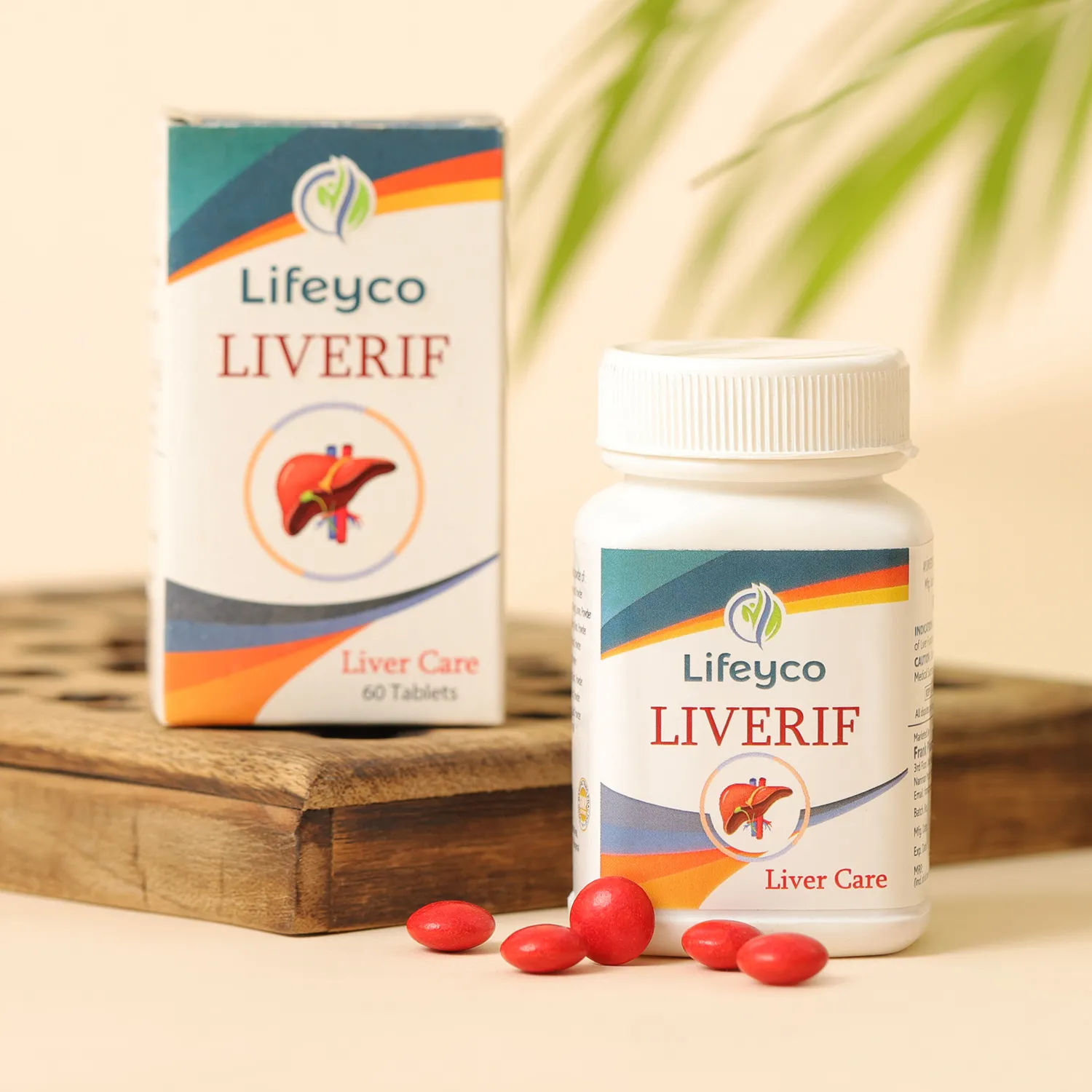
Lifeyco Liverif Tablet — 60 Tablets
Ayurvedic liver care formula with Makoi, Kasini, Baheda, Narkachur, Saunth & Kali Mirch. Protects liver from viral infection, improves metabolism, useful in alcoholic & non-alcoholic liver diseases. AYUSH Approved, GMP Certified (Licence No: 1264-ISM HR).
Dosage: 1 tablet before lunch & 1 before dinner, or as directed by physician.
New customer? Use code WELCOME10 for 10% off.
Disclaimer: This article is for educational and informational purposes only and does not constitute medical advice. Lifeyco Liverif Tablet is a traditional Ayurvedic dietary supplement — based on traditional Ayurvedic principles, not intended to diagnose, treat, cure, or prevent any disease. For any liver-related symptoms, please consult a qualified hepatologist or healthcare professional promptly.